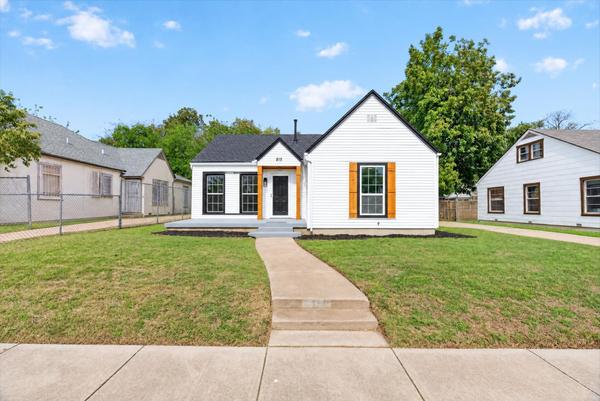
Tour Fort Worth Homes After Your Financing Is Ready

Why should you sort out financing before you tour Fort Worth homes?
Before you tour Fort Worth homes, get a written preapproval and build your own all-in monthly payment. A lender's approval amount is a ceiling, not a budget. Your real price range also depends on property taxes, insurance, cash reserves, and how much monthly room you want to keep.
Key Takeaways
- Fort Worth's median sale price was $319,175 in October 2026, with about 88 days on market, according to Greater Fort Worth Association of REALTORS® data, so you have time to get financing right before you shop.
- Your search ceiling should come from your all-in monthly payment, not from the largest loan a lender will approve.
- Property taxes, homeowners insurance, mortgage insurance, HOA dues, and a maintenance allowance all belong in your payment before you pick a price range.
- Keep post-closing reserves separate from your down payment and closing funds.
- A preapproval is not a final loan commitment, because the home itself still goes through appraisal, title review, and underwriting.
A buyer once came to our first meeting with an approval letter and a list of houses priced right at the top of it. On paper, everything worked. Then we added property taxes, insurance, and the cash they wanted left in the bank after closing. The top of that approval stopped looking comfortable, and we reset the search ceiling before they walked into a single showing.
That's the pattern I see most with first-time buyers. They start with showings and sort out financing later, then fall for a house that doesn't fit the budget they actually need.
What should you settle before you tour Fort Worth homes?
Settle three things: your all-in monthly payment, your cash plan, and a written preapproval. Every other decision in your search follows from those.
Why isn't the lender's approval amount your budget?
Because the approval amount comes from underwriting limits, not from your life. It doesn't know how much emergency cushion you want, what your commute costs, or what other bills you carry. You may qualify for more than you'd ever want to pay each month.
I tell buyers to work backward. Decide the monthly payment you're comfortable with, then let that number set the price range.
What goes into your all-in monthly payment?
Principal and interest are only the start. Build your payment from every line below:
- Principal and interest on the loan
- Property taxes, based on the home's taxable value and the rates of each taxing unit
- Homeowners insurance
- Mortgage insurance, if your loan type requires it
- HOA dues, if the home has them
- A maintenance allowance for the repairs every house eventually needs
Taxes deserve extra attention. Texas property taxes are set by taxable value and the rates of each taxing unit, and those can differ by county, city, school district, and special district. Two homes at the same price in Keller and Crowley can carry very different tax bills. A generic online payment calculator can understate your total.
If rates are part of what's worrying you, my breakdown of how mortgage rates affect buying power in Fort Worth shows how they move your payment.
Why keep your cash plan in separate buckets?
Because a buyer who uses every available dollar to reach the lender's maximum may qualify and still have no flexibility after moving in. Separate the money into four buckets and know the purpose of each.
| Cash bucket | What it covers | Why keep it separate |
|---|---|---|
| Down payment | Your upfront equity in the home | It reduces the loan, but it isn't your only cash need |
| Closing and prepaid items | Lender charges, title charges, recording, appraisal, inspection, prepaid taxes and insurance | These come due at closing on top of the down payment |
| Moving and immediate repairs | Movers, utility setup, quick fixes after you get the keys | New homes often need money in the first few weeks |
| Post-closing reserves | Emergency cash after you've moved in | This is your cushion if life or the house surprises you |
I won't put dollar figures on these buckets here, because your numbers depend on your loan, your contract, and your lender. My guide to how much cash you need to buy a house in Fort Worth walks through the categories in more depth.
How do you get preapproved for a home in Fort Worth?
Talk to a lender, share your income, asset, credit, and debt documents, and ask for a written preapproval that spells out the terms. Do this before you schedule a broad tour. Here's the order I walk buyers through:
- Talk to more than one lender. Rates, fees, and loan options vary, and comparing them costs you nothing but time.
- Gather your documents. Expect to share proof of income, assets, credit, and existing debts.
- Read the preapproval closely. A useful one names the loan type, the approved price ceiling, estimated cash to close, assumptions about your down payment and reserves, and any documents still required.
- Set your own ceiling. If the approval number is higher than your comfortable payment, go with your payment.
- Ask for a property-specific scenario on each serious candidate. Have the lender run the home's price, your down payment, loan type, rate, estimated taxes, insurance, HOA dues, and any mortgage insurance.
- Compare closing figures. Your closing agent, which in DFW is usually a title company (a real estate attorney is another standard option), can give you preliminary settlement figures. Check them against your lender's Loan Estimate and, later, your Closing Disclosure.
If you're not sure what to ask for or how to read what a lender sends back, that's exactly what a first consultation is for. Book a time with me and we'll build your payment and cash plan together before you tour anything.
What can still change after the lender says yes?
Quite a bit, because the lender approves you as a borrower, but the specific home gets reviewed too. A house can raise appraisal, insurance, condition, title, HOA, flood-risk, or documentation questions even when your approval is solid.
Why do you need liquidity and time to handle the property review?
Preapproval isn't a final loan commitment. Final approval depends on appraisal, title review, and a last verification of your income, assets, credit, and debts. If an insurance quote or tax estimate comes in higher than you planned, your payment changes. Buyers who stretched to the maximum have nowhere to absorb that. Buyers who left room can adjust and keep going.
How does the homestead exemption fit in?
It can lower your future tax bill, but don't count on it in your starting math. Texas school districts must provide a $140,000 residence-homestead exemption under Tax Code §11.13(b). Some taxing units also adopt a local-option exemption of up to 20% of appraised value. It reduces taxable value, not the home's price or your mortgage balance.
It applies to your qualifying residence homestead, not an investment property or second home. You apply through the county appraisal district. Confirm your filing timing and eligibility with them, and don't assume your lender's initial underwriting will count it unless they say so in writing.
What does the local market tell you about timing?
It tells you that getting financing right first costs you less than rushing. In October 2026, Fort Worth had 3,494 active listings and about four months of inventory, and Tarrant County had 6,857 active listings with 3.8 months of inventory, per the same GFWAR report. Across DFW, MetroTex data shows closed sales down 15.6% year over year in October, while the median price slipped 1.6%.
Price points also vary widely. In third-quarter 2026, the largest DFW price band was $300,000 to $399,999 at 26.1% of sales, but 21.3% of sales fell between $200,000 and $299,999, according to Texas REALTORS® data. Those are market snapshots, not a rule for what you should spend. Your range comes from your payment, your down payment, your reserves, and your comfort level.
If you own a home you need to sell first, that changes the financing plan too. I cover it in my game plan for selling before you buy in Fort Worth.
When you're ready to tour Fort Worth homes with a clear number, a payment you trust, and cash set aside, showings get a lot more productive. You'll know quickly which houses fit and which ones to skip. Schedule a consultation and we'll set that number together, or search homes that fit your range.
Want to hear how past clients felt about the process? Read Dina's reviews on Google, Zillow, and Realtor.com.
FAQ
When should I get preapproved before touring homes?
Get preapproved before you schedule a broad tour. One or two casual walkthroughs to see what a price point feels like are fine, but serious touring should wait until you have a written preapproval and your own payment ceiling.
Does a mortgage preapproval guarantee I can buy the house?
No. A preapproval is not a final loan commitment. The lender still has to review the property and verify your income, assets, credit, and debts before final approval.
Should I compare lenders before I start touring?
Yes. Different lenders can offer different rates, fees, and loan options, and you want those terms in hand before you fall for a house. Ask each one for a written estimate using the same price, down payment, and loan type so the comparison is fair.
How much cash should I keep in reserves after closing?
There's no single right number, because it depends on your income stability, the age of the home, and how much cushion lets you sleep well. Treat reserves as their own bucket, separate from your down payment and closing funds. We can size yours during a consultation.
What if taxes or insurance come in higher than I expected?
Ask your lender to rerun the payment with the real numbers for that home. Then you can adjust your offer price, your down payment, or your plan, or walk away from that house. Run it by me before you write an offer, not after.
Equal Housing Opportunity. Dina Morales is a licensed Broker Associate in the state of Texas, TX #0622850 | TREC (Texas Real Estate Commission). This article is general information, not legal, tax, or financial advice. Confirm your own numbers with your closing agent, tax advisor, or lender.
Categories
Recent Posts