How to Sell Your First Home Without Overpricing
How to Price Your First Home for Sale in Fort Worth Without Letting It Sit
If you're selling your first home in Fort Worth, one of the biggest decisions you'll make happens before the listing ever goes live:
What should you ask for it?
Price too low, and you may leave money on the table. Price too high, and buyers may choose competing homes before they ever seriously consider yours.
My approach is straightforward: build the opening price from recent comparable sales and the homes buyers can choose from today. Then watch what buyers actually do after the home hits the market.
I also like having predetermined review points after the first weekend, at the end of week one and around day 14—so we're making decisions from evidence instead of emotion.
What Is the Fort Worth Housing Market Telling Sellers Right Now?
As of October 2026, Realtor.com reported approximately 5,807 active listings in Fort Worth, with a median listing price of about $342,495 and median market time of 57 days.
Across the broader Dallas-Fort Worth metro, about 26.4% of listings had a price reduction in October.
Those numbers don't determine what your individual home is worth. But they do tell us something important:
Today's buyers have choices.
That makes your initial price and your position against competing homes especially important.
Fort Worth is also not one uniform housing market. A home in West Fort Worth can face very different competition from a home in North Fort Worth, Benbrook, Keller or another part of Tarrant County.
That's why I use citywide statistics for context not to price an individual house.
How Should You Price Your Home?
Start with two groups of properties:
1. Recently sold comparable homes
These tell us what buyers have actually been willing to pay.
I generally want the closest reasonable comparison available based on factors such as:
-
Location and subdivision
-
Property type
-
Living area
-
Bedroom and bathroom count
-
Lot characteristics
-
Age
-
Garage
-
Pool
-
Renovation level
-
Roof, HVAC and other major systems
A renovated home isn't automatically comparable to an untouched home just because they're on the same street.
Likewise, a home with a pool, newer roof or significantly different lot may need adjustments before it tells us much about yours.
2. Homes currently competing with yours
Closed sales tell us about the recent past.
Active listings tell us what your buyer can choose today.
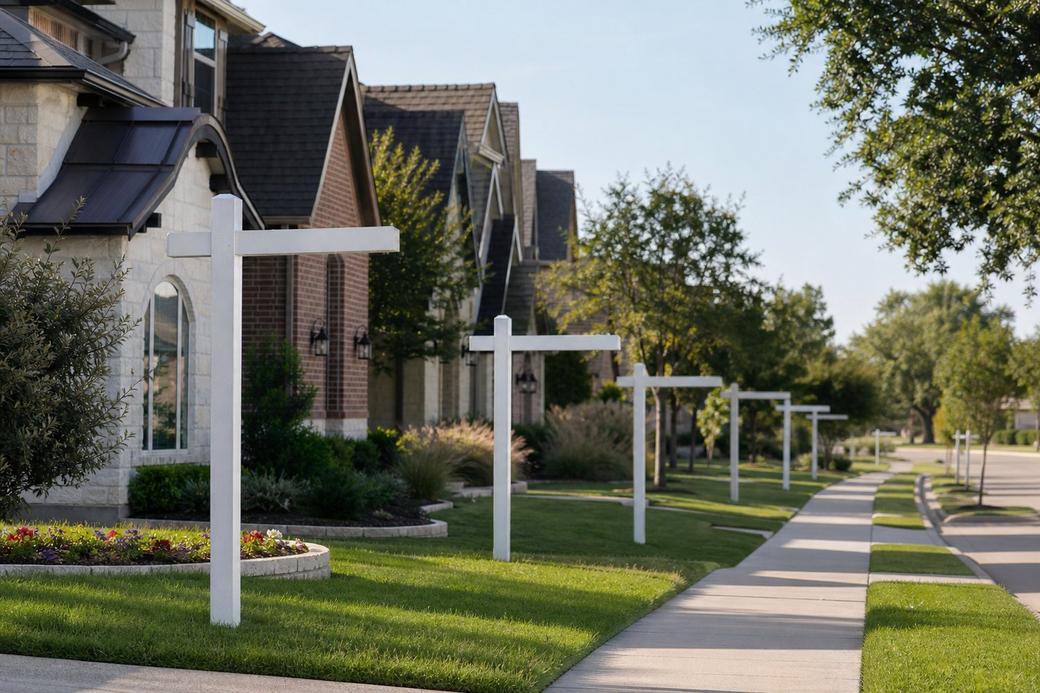
Imagine a buyer sees three similar homes:
Your home: $365,000
Competing home: $349,000
Competing home: $355,000
Your home doesn't automatically need to be cheaper.
But buyers need to see a reason for the difference.
Maybe yours has better updates, a larger lot, a newer roof, an additional bedroom or other meaningful advantages.
If they can't see the additional value, they'll often tour the other homes first.
Why Can Starting Too High Hurt a Listing?
One of the most common things I hear from sellers is:
“Let's start high. We can always come down.”
Technically, you can.
But that doesn't mean it's always the best strategy.
Buyers search within price ranges, compare similar listings online and receive new-listing alerts.
If your home is positioned above competing properties without enough additional value to justify the difference, buyers may simply move on.
That doesn't necessarily mean nobody likes the house.
It may mean the buyer doesn't believe the home's value matches the asking price.
And reducing the price later doesn't recreate the exact same first impression the listing had when it initially appeared.
That's why I would rather make the strongest evidence-based pricing decision we can before launch.
What Should Sellers Watch During the First Two Weeks?
Online views are useful, but I care much more about buyer behavior.
I watch:
-
Showing requests
-
Completed showings
-
Second showings
-
Buyer-agent feedback
-
Repeated objections
-
Offers
-
Changes in competing inventory
Those signals help us determine whether the issue is price, presentation, condition, access—or simply that we need more time.
Lots of online views but very few showings
Buyers are seeing the property but aren't taking the next step.
That can point to price positioning, photography, condition, listing presentation or another issue visible online.
Showings but no offers
This deserves attention.
It may indicate buyers like the home enough to visit but don't see enough value at the current price to write an offer.
Before automatically reducing the price, I would compare the feedback with current competition, condition and any newly listed or recently sold homes.
Second showings or serious questions
That's a stronger sign of real interest.
It doesn't guarantee an offer, but it's much more meaningful than passive online traffic.
Offers
Now we have actual market evidence.
At that point, the conversation changes from generating interest to evaluating price, financing, concessions, contingencies and the strength of the buyer.
My First-Two-Weeks Pricing Plan
I don't like sellers checking online views every few hours and wondering whether something is wrong.
Instead, I prefer scheduled review points.
After the first weekend
Look at how many showings were requested and completed and what early feedback we're hearing.
One weekend isn't enough information to panic over.
But obvious problems should still be addressed.
End of week one
Now we're looking for patterns.
Are multiple buyers making the same objection?
Did competing homes go under contract?
Did new competition enter the market?
Are buyers viewing the listing online but not scheduling appointments?
Around day 14
By this point, we should have enough information to make a more meaningful assessment.
The decision might be:
Hold the price.
Improve presentation.
Change showing access.
Adjust terms.
Or:
Reposition the price.
The point isn't to automatically reduce the price after 14 days.
The point is to make a deliberate decision instead of simply hoping something changes.
When Should You Consider a Price Adjustment?
There isn't one magic number of showings or days on market that applies to every Fort Worth home.
I become more concerned when we see patterns such as:
-
Consistent showings without offers
-
Buyers repeatedly mentioning price or value
-
Similar competing homes going under contract while yours remains available
-
New listings offering better value
-
Very little activity after presentation and access have been addressed
A price adjustment should also be meaningful.
Dropping the price a few thousand dollars simply to say we reduced it may accomplish very little.
I want to know:
Where are buyers searching?
Where is the competing inventory priced?
What has recently sold?
Would the new price actually change how buyers compare the home?
Then we decide what makes sense.
What About New Construction?
This is increasingly important for Fort Worth-area sellers.
Depending on your location and price range, your resale home may compete with new construction.
Buyers aren't only comparing purchase prices.
They may also be comparing:
-
Builder financing incentives
-
Closing-cost assistance
-
Warranties
-
New appliances and systems
-
Energy efficiency
-
Upgrade packages
Your home may have advantages too an established location, larger lot, mature landscaping, completed improvements or features that would cost extra in new construction.
The pricing strategy needs to account for what the same buyer can purchase elsewhere.
What If Your Fort Worth House Is Already Sitting?
Don't automatically assume the answer is another price reduction.
I would review the entire listing:
Price.
Competition.
Condition.
Photos.
Marketing.
Showing access.
Buyer feedback.
Terms.
If you're already dealing with this situation, read my guide on what to check when a Fort Worth house isn't selling.
And if selling your current house means buying another one, my Fort Worth sell-before-you-buy game plan explains how to coordinate both transactions.
FAQ
How many showings should I expect during my first week?
There isn't a reliable universal number. Activity varies by location, price, property type, condition and competing inventory. I compare your activity against similar nearby listings rather than relying on an arbitrary showing target.
Should I intentionally price below market value to create multiple offers?
Sometimes that's a legitimate strategy, but multiple offers are never guaranteed. Whether it makes sense depends on your home's value, competition, market conditions and your goals.
Should I lower my price after the first weekend?
Usually I wouldn't make a major decision from one weekend alone unless the home is clearly mispositioned or we identify an obvious problem. I use the first weekend as an early checkpoint and continue watching buyer behavior through the first two weeks.
Can new construction affect my resale home's price?
Absolutely. If buyers considering your home can purchase nearby new construction, builder incentives, warranties, upgrades and financing offers become part of your competition. Your pricing strategy should account for that.
What's the biggest pricing mistake first-time sellers make?
Pricing primarily around what they want to net rather than what comparable homes and current competition support. Your financial goal matters, but buyers ultimately decide what they're willing to pay.
Thinking About Selling Your First Home in Fort Worth?
You don't need someone to give you the highest number just to win your listing.
You need to understand what the evidence supports and how we're going to respond once buyers start giving us feedback.
If you're considering selling, I can review the recent sales, current competition and your home's condition with you before we decide what price makes sense.
Dina Morales | Selling Fort Worth
Broker Associate | OnDemand Realty
817.881.3474
RealtorDina.com
My job isn't to pressure you into selling or into a particular price. It's to put the information in front of you so you can make a decision that makes sense for you.
Categories
Recent Posts